Tuesday, October 30, 2018

12 Years a Slave

Image of Solomon and his master Epps from 12 Years a Slave

According to Noah Berlatsky of the Atlantic, the movie 12 Years a Slave isn't completely accurate in regard to Solomon Northrop's autobiography. He describes the scene in which a slave woman makes use of Solomon's hand in order to satisfy her own sexual desires. He explains that this scene expresses the despondency and "fierce sadness" of both slaves, but how in a way the interaction represented "human contact and bitter comfort" in the sense that it was an emotional connection between them despite the miserable circumstances. However, this event never happened according to Northrop's autobiography, and the director added the instance in order to add a horrific incident that would give the audience an image as to the terrible things that slaves faced. Also, the slave that was killed on the ship by one of the sailors was not actually murdered according to Solomon's biography, but rather died of smallpox on the voyage. The film also failed to include the fact that Solomon had smallpox and that his face was scarred as a result. Berlatsky says that this is most likely left out of the movie so that Solomon's face would remain unblemished, and the viewers would be able to read his "beautiful, expressive, haunting features"and depict what the filmmakers were trying to insinuate. Another inconsistency Berlatsky describes is about the scene in which Patsy tells Solomon to drown her in the swamp. In his autobiography however, Solomon says that it was actually master Epps' wife who wanted him to drown Patsy. This discrepancy, Berlatsky says, was most likely due to a simple misunderstanding from autobiography to movie script. Berlatsky says that the fictional parts of the film are not used in a way that distracts from its main focus, but rather adds to the narrative being described. He provides an example of true stories being fictionalized by giving evidence that slave narratives were not written by the slaves themselves, but rather by white abolitionists. This caused there stories to be altered, due to the biases and differing opinions of the abolitionists. He goes on to describe how Solomon's own story was told by him to a white lawyer named David Wilson. He tells how this affected the biography's language and generally how it was told.

Tuesday, October 23, 2018

Slave Narratives

From my time researching these articles and narratives, I have gotten to know more about what slavery was like from various slaves' perspectives. While reading through the National Humanities Center about relationships between masters and slaves, I learned that slaver was mentally and emotionally challenging for both masters and slaves. Masters not only owned their slaves, they were in complete control, were harsh and overbearing, and were expected to be so. They were forced to assure themselves that what they were doing wasn't morally wrong, and that their belief that slaves were only property was good and true, even as they witnessed what the slaves were experiencing right in front of them. Slaves were not only compliant, but totally submissive and subject to their masters' rules. They would obsess over what they would do and say in order to keep their masters content and prevent anger or violence. This constant "self-monitoring" and self-examination must have been immensely taxing on them, which is part of the reason why slavery was so terrible. Slaves also had to think about why they were slaves in the first place, and wonder if they really were meant to be inferior like that, or if it was simply the harshness and oppressiveness of their masters that was the problem. The masters, in turn, had to convince themselves as well as the slaves that slavery was morally acceptable and was the way it should be. In what ways were masters challenged morally through slavery? What do you think it did to slaves mentally when they were told they were meant to be slaves, and were naturally inferior?

Wednesday, October 17, 2018

Paraphrase Practice

Lincoln Movie Review: The New York Times, A President Engaged in a Great Civil War

     "Lincoln's wife, Mary - he calls her Molly, and she is played with just the right tinge of hysteria by Sally Field - is still grieving the loss of another son, Willie, from illness during the first year of the war, and her emotional instability is a constant worry to her husband. These private troubles combine with the strains of a wartime presidency to produce a portrait that is intimate but also decorous, drawn with extraordinary sensitivity and insight and focused, above all, on Lincoln's character as a politician. 
     This is, in other words, less a biopic than a political thriller, a civics lesson that is energetically staged and alive with moral energy."

My Paraphrase of this Selected Passage:

     In the movie, Lincoln is continually concerned about his "hysterical" and "emotionally unstable" wife Mary, performed by actress Sally Field. Field is spot on with her representation of Mary and her reaction to the horrendous loss of her son Willie during the Civil War's inaugural year. Lincoln is shown balancing this personal home-life struggle with the stressful demands of being president, all while leading the nation through a bitter civil war. His portrayal in this film is extremely detailed and vivid, giving and inside glance at how Lincoln acted as a political leader during his presidency. This very personal look into Lincoln's life forces the film to be viewed primarily as a "political thriller" rather than a biography on his life, as there is too much focus on morality for it to be a completely non-fiction movie.

Thursday, October 4, 2018

Baseball / Cricket in the Reconstruction Era

Cricket Player in the 19th Century
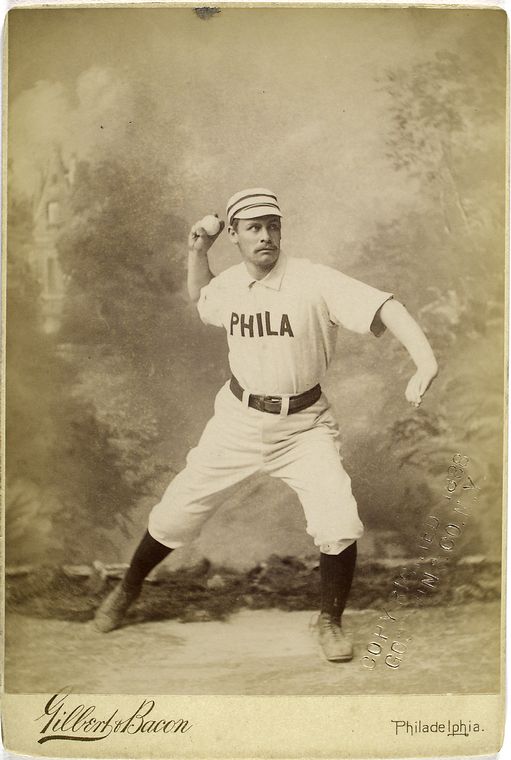
Baseball Player in the 19th Century


During the Reconstruction Era (mid to late 19th century), there was a game of cricket played between two teams in 1879. The game was between a cricket team called Daft's All England Eleven and a baseball team of eighteen baseball players. The game was played at the Union Baseball grounds in Brooklyn, and apparently the team of cricket players defeated the team of baseball players very handily and won the match. The news article, from the New York Herald, describes when and where the match was played, as well as the details of the names of the players, how the match went, and how it ended. It goes on to say that ten of the cricket players will play the Providence baseball men that night (the night the newspaper was published) in a baseball game. This information leads the reader to believe that the sports were crossing over in an attempt to acquire more attraction to each sport. Baseball might not have been as popular as cricket at the time, so the baseball players might have been playing cricket teams in order to gain more awareness and support from the community, or simply because there weren't very many other baseball teams to play.

The End of Reconstruction

Newspaper Reflection:

The newspapers showed me the general population's view of African Americans during this time period and in what light they thought about them. It was also weird to see words and phrases that are socially unacceptable in modern day, but were commonly used back then. These newspapers helped me to get a glimpse at the past and what life was like.


End of Reconstruction Research:

Reconstruction ended after Rutherford B. Hayes was elected. Republicans had given up hope for fighting for equality and rights for blacks, and after the election of 1877, the Union troops that had been in the South for protection were commanded to leave, leaving the blacks in the South susceptible to endless harshness and oppression. (I used the textbook as my source)

Tuesday, September 25, 2018

Lincoln Movie Response

A picture of Lincoln along with other government officials from the movie "Lincoln"

1. Lincoln was uncompromising in the fact that he would not let anyone's opinion or thought about how successful the amendment would be affect his judgement and his decisions. He stayed persistent, all the while trusting his beliefs that slavery was wrong and that its abolition was the right thing to do for the country. Thaddeus Stevens was uncompromising in the fact that he also believed that slaves should be freed and should be equal under the law. He made a compromise on the House floor however, when he did not admit that he believed that slaves were equal in all facets of life, and he only stated that he believed that they should be equal under the law. Neither man was willing to compromise his beliefs and morals, but both were forced to compromise some of what they wished to reveal to the public in order to get the 13th Amendment passed.

2. The movie provided evidence of Lincoln's perspective, similar to the Lincoln Letters, by showing his internal struggle with whether the abolition of slavery was necessary for the Union. He is shown throughout most of the movie wanting to end slavery with this new 13th Amendment, but unsure whether it would be feasible and whether it was the right choice to make for the nation. He eventually decides in his mind that the amendment is necessary to the nation's longevity and well-being, so he then commits all of his efforts to getting it passed and abolishing slavery, which is is ultimately successful in despite great opposition from many.

3. Lincoln believed that the 13th Amendment was essential because he thought it was the only way to keep the Union together permanently. He could have ended the war without abolishing slavery, but he thought that ending slavery was necessary for the nation to be repaired. His view on this evolved over time, because at first the only argument he had against slavery was on moral grounds, but then by the end of the war he believed slavery not only should be abolished, but needed to be.

4. The movie complicated the narrative that the North was against slavery and wanted racial equality and the South was for slavery and against racial equality by showing that not everyone who was against slavery wanted racial equality. For example, many Republicans who weren't radical did not like slavery, but did not want racial equality, primarily for fear that the freed slaves would be able to vote and would have the same power as themselves.

5. In the film, many people seemed to resist the end of slavery not because they thought that slavery was morally acceptable, but rather because they were afraid of what would happen if slaves were freed and given equal rights as white men. They were afraid that slaves would have the right to vote and participate in government, having as much power as the they themselves possessed. Them movie did not depict this opposition as a concern for property rights as much as a fear for what the slaves would do to them if they had equal power under the law.

Friday, September 21, 2018

Civil War Letters Collection

A page of one of Capt. James A. Sayles handwritten letters to Florence Lee


Captain James A. Sayles to his sweetheart, Florence Lee, February 10, 1864

Capt. James A. Sayles talks to Florence about her parents, specifically about whether her father had returned and if she had told him of their engagement. If so, he wanted to know what her father had said, and also just wanted to thank both of her parents for their kindness to him. Finally, he asks her to keep him in mind and talk of him to her mother and to her friends, as well as write him frequently.

Captain James A. Sayles to his sweetheart, Florence Lee, February 20, 1864

Capt. James A. Sayles fills Florence in on what has been going on, but also goes into great detail telling her how much the a picture of her and the letter sent with it that he received meant to him. He tells her he appreciated and prized the gift very highly, but compliments her saying that the picture doesn't do her beauty real justice.

Captain James A. Sayles to his sweetheart, Florence Lee, May 17, 1864

Capt. James A. Sayles writes to tell Florence that his regiment is going to march soon, but that he greatly desires to write her before they leave. He apologizes ahead, saying that she will have to pay three cents for postage because he doesn't have any money for stamps. He writes about how he longs to see her that morning, and talks about looking forward to the time they can spend together when he gets to see her again.

Captain James A. Sayles to his sweetheart, Florence Lee, June 11, 1864

Capt. James A. Sayles writes a letter explaining some of his military opportunities and a decision he has to make on which opportunity to take and commit to, eventually saying that he wishes to remain in the Calvary as opposed to the 18th Army Corps, as he thinks he will be able to achieve a higher position there. He also writes about how it has been several days since he has received a letter from her, expressing his discontent with that and saying how he wishes she would write him more often. He tells her she would write him more often if she only knew how anxious and worried he is about her.

Captain James A. Sayles to his sweetheart, Florence Lee, June 16, 1864

Capt. James A. Sayles starts off his letter to Florence by asking why she hasn't responded, even though she has received many letters from him recently. He wants her to know that when she doesn't write, he gets very nervous about her well-being, and wonders if she is sick or if something bad had happened. He tells her that he writes as often as the war will allow him to, and wishes that she would do the same, expressing how disappointed he gets when there is no word from her.


This collection of letters is written by Captain James A. Sayles to his beloved sweetheart, Florence Lee, between February and June of 1864. The letters all affirm his affection for his fiancée, as well as his desire to be accepted by her parents. Though he tells her and fills her in about the war, in each letter, the common theme of his writing is how much he misses her and desires to see her, and that he wishes she would write more often to him. In almost every letter, he mentions something about her sending him more letters, and that he worries about her when she does not respond. He is disappointed by her lack of writing to him, especially since he takes it upon himself to send her a letter whenever he gets a chance. This shows the strains that the Civil War put on couples and families as far as communication goes. A heavy burden was placed on relationships due to the war, because it broke them apart for years at a time, with little chances to see or talk to one another. The best way to talk to a loved one was by writing letters, which is a slow and inefficient way to communicate, especially for people who are used to seeing and talking to each other every day. One can imagine how hard it was on couples and families during this time just by reading the words of a soldier like James A. Sayles. How do you think relationships changed during the Civil War? Do you think it strained or hurt relationships? How much did the lack of effective communication at the time affect how people kept in touch with loved ones? How has communication between soldiers and their significant others changed since the Civil War, and do you think it has made it easier for people to maintain relationships during a war period?