Thursday, December 13, 2018

Refrigeration

An electric"Monitor Top Refrigerator" made by General Electric 

            The invention of refrigeration has changed everything about food forever, from its transportation, to its process of consumption, to the way its tools are marketed. It has allowed mass access of fresh foods to the general public, has changed the culture surrounding cooking and eating, and has allowed for companies to market their new products using the ever-useful innovation of the electric refrigerator. The effects that it has had on the world are vast, and it is vital to society for all of its great practical and affordable uses. However, it is also a critical invention because of how it has impacted other areas of society and created ripple effects throughout its sphere of influence.

            The refrigerator not only made itself one of the most useful, impactful inventions of its time, but also allowed for other products to be invented and marketed. By using the refrigerator’s mass success, companies could market their own products by basing their advertising on what was desired by society. Some of these companies were separate, others were the refrigerator companies themselves trying to attract more people to their original product. Either way, the huge invention of the electric refrigerator spurred an opportunity for marketers to sell their goods to the mass public with ease and success. Some products that are proof of this happening are the invention of ice trays, cookbooks, stackable refrigerator dishes, Tupperware containers, and shopping carts. All of these items were used in conjunction with the new refrigerators to create and new culture around the process of buying and consuming food. The ice tray was a direct example of this, as ice transitioned from a product originally used to chill iceboxes to a novelty item that was used to cool drinks and make things more enjoyable. Frigidaire, one of the most prominent refrigeration companies at the time, said this in their household sales textbook. “The use of ice-cooled beverages in the home is becoming constantly more popular. This calls for… ice of suitable size for cooling drinks.” This refrigeration company, Frigidaire, saw an opportunity to make money, while promoting their refrigerators at the same time. They made ice trays to go along with the electric refrigerator, in an attempt to further entice the public into buying their product. Another example that is not as direct, is the invention of the shopping cart. Because refrigerators were able to keep food for longer amounts of time and increase food-life, people didn’t need to go to the grocery store as often as before. However, when they did go, they had to buy more food than usual and stock up their fancy, new electric refrigerator. In 1937, a grocery store owner saw this need, and decided to invent the grocery cart to help people carry more items around the store, as well as to increase sales for the store. An advertisement in the Oklahoma City times put it, “Can you imagine wending your way through a spacious food market without having to carry a cumbersome shopping basket on your arm?” They marketed this grocery cart as making it much easier and simpler for the consumer to buy groceries, which was true, but it also caused people to pile up more and more food in their carts, increasing sales and changing society’s shopping habits forever.
A magazine cover portraying a child in the newly invented shopping cart

            Refrigeration also changed the way people use and consume food. Because items could now be kept cold while being sent all over the country, people now had access to quality, whole foods at all times of the year. With the refrigerated train car, patented by J.B. Sutherland in 1867, and many cold, insulated trucks and vehicles to be used soon thereafter, fresh food could be transported wherever a consumer demand was. This refrigeration helped to establish slaughter centers in mid-western cities like Chicago and Kansas City, as they were in close proximity to the railroads being used by these refrigerated cars. It also led to a regional produce specialization, which allowed for fresh foods to be spread all over the country and the expansion of consumer markets. All of this access to quality food created healthier diets for people who could now consume meat, produce, eggs, butter, milk, cheese, and fish year-round. Refrigeration altered when and how food was cooked and consumed, as it was now encouraged to cook big meals for the rest of the week and save the extra food in the refrigerator. This created a culture of leftovers, making it very popular and even expected to save one’s uneaten food and store it in the new electric refrigerators that created more space and lengthened the lifespans of the foods stored in them. The Great Depression and the World Wars further accentuated this common culture, as it was imperative for families to not throw food away, and rather carefully preserve their food, and therefore their money as well. Another aspect of the food preparation process that refrigeration changed was women’s role in the preservation of perishable foods. Before, they would have to spend huge amounts of time pickling or drying items, but the addition of the refrigerator excised all of that extra work and time, as well as maintained the food’s original taste and kept it fresher. Finally, society’s idea of the freshness of food has changed significantly since the invention of refrigeration. People don’t have to live in rural, farming areas to have access to fresh food anymore, as that same food can be transported to them while being kept cold quickly and easily. In addition, when people get these foods from the grocery store, they no longer make a decision on the food’s freshness based on touch, feel, or smell, but rather rely on the date printed on the items. Stores, brands, and manufacturers have begun to tell us which things are fresh and edible still, making the process of keeping and consuming food that much easier. 

            With the advent of the electric refrigerator, society was permanently altered. Refrigeration has affected society in so many ways since it was invented, and the world would differ greatly if not for its presence. It has led to cultural changes in the way consumers shop, cook, and eat, as well as allowed for innovators and marketers to supply the market with tools and other inventions that go hand in hand with the refrigerator, whether that be through direct relationships or ripple effect connections.
Advertisement portraying a happy family stocking their electric refrigerator full of food

Sources:

History Magazine: The Impact of Refrigeration This source is where I found most of my general information on the history of the refrigerator and its origins.
Smithsonian: Keeping Your (Food) Cool: From Ice Harvesting to Electric Refrigeration This source is where I learned some more specifics about the electric refrigerator, as well as about some innovations sold to the public by marketers after the inventions of the refrigerator.
Smithsonian: Not Just a Cool Convenience: How Electric Refrigeration Shaped the "Cold Chain" This source was an interview in which the effects of the electric refrigerator on specifically American society was discussed.
Colby.edu: Refrigeration Changed... Everything This source was an educational personal narrative in which the author describes some specific impacts that the refrigerator has had on food and freshness.
Smithsonian: Sparkling Delights This website includes a primary source from the Frigidaire Household Sales Textbook, and discusses the use of ice cubes and the ice tray after the invention of the refrigerator.
Smithsonian: "An Innovation in Shopping" This website includes a primary source from an advertisement in the Oklahoma City Times, and discusses how the refrigerator affected shopping, as well as the invention of the shopping cart.

Tuesday, November 27, 2018

The History of Thanksgiving


The First Thanksgiving


             Although the rituals and traditions of Thanksgiving have changed over the years, the holiday’s core values of food, community, and gratitude have remained constant the whole time. From “the First Thanksgiving” back in 1621 with the Pilgrims and Indians, to modern day thanksgiving meals, people have gathered around a table with their families and communities in order to show their thankfulness for what they have. It is a holiday that serves as a reminder to put aside differences and conflicts, and come together with an attitude of gratitude and love.

It is widely thought that the rituals of Thanksgiving are directly derived from the original Thanksgiving meal between the Pilgrims and Natives, but that train of thought is untrue for many of the practices that are performed. The Pilgrims did arrive in North America in 1620 and had a feast the next year in 1621, but they weren’t trying to create a new holiday. The feast was really an event spanning three days that celebrated their recent successful harvest. As far as the Indians being present, there were members of the Wampanoag tribe in attendance, but many think that those people weren’t even really invited, but rather simply farmed in close proximity to the Pilgrims and were celebrating the harvest with them. This practice of making a huge feast after a successful harvest was nothing new to either group of people. Natives and other cultures alike had been doing this for years, so to call it the first of its kind is mostly inaccurate. It is true however that this event was unique in the fact that it brought two distinct cultures together in a celebration filled with food, games, and prayer. Although the general public thinks of this feast when talking about the holiday’s origins, the event wasn’t called Thanksgiving until the 1830’s when New Englanders decided that it was fitting, and even then the holiday wasn’t official until Lincoln issued an official proclamation in 1863.

Another huge impact on Thanksgiving has been the evolution of which foods are served on that special day. One big reason for the variation in Thanksgiving meals is due to the vast number of different cultures, religions, ethnicities, and backgrounds. People from different parts of the world have different popular dishes within their cultures, and although some of the holiday’s food is kept constant, each different culture adds their own familiar dish to the table. Another major factor for these differences has been the effect of Marketers. Marketers have created ideals for the so-called traditional Thanksgiving meal, and have kept up their tactics over the years in order to increase their business. Some of the foods that are the most intricate parts of the Thanksgiving meal in many people’s minds are really just a result of Marketers promoting them and using false advertising to sell the public on their brand. A few of the main examples include turkey, cranberries, and pumpkin pie. There is no evidence that turkey was one of the foods eaten by the Pilgrims and Indians, only enough evidence to conclude that they had some sort of wild fowl. Yet these Marketers sold the idea of turkey as the main dish of Thanksgiving in order to promote tools like roasters, ranges, pop-up thermometers, and oven-cooking bags. As far as Cranberries and pumpkin pie, these items were probably never seen at the First Thanksgiving, and are only around today because of Marketers promoting their name brand foods to the public.

Thanksgiving has changed so much over the years, that it even used to include another popular holiday that we celebrate today. What is now known as Halloween, involving kids dressing up in nice, new, fun costumes and going trick-or-treating, used to be called Thanksgiving Masking or Ragamuffin Day. This occurred on the same day as the Thanksgiving meal, and was very popular among poor children in New York City. These children would go out wearing costumes and masks, and go door to door asking for fruit, candy, pennies, and nickels. The most popular costumes were ones of beggar’s rags or little boys in girls clothes, but others included masks of birds and animals, political figures, and exaggerated faces of people of other nationalities. This holiday was a fun day for children to go out and cause trouble, but even the adults liked the day and were very generous with their giving away of candy and change. However, some people began to think that it was too immature and should not be on the same day as the national day of thanks, so it was eventually moved to a different date and evolved to become what is now known as Halloween.

National days of thanks have been declared by government officials for years in order to celebrate military victories or national accomplishments. It has been used to reward citizens and soldiers for their hard work and achievements. Many leaders have used these days to celebrate, but all the past days of thanks have been random dates that were only issued when the government officials felt it reasonable to have one. However, after Lincoln issued the proclamation that made Thanksgiving an official holiday, it became a set date on the final Thursday of November. Since then, it has become of greater importance than ever before, with people all over the country and even world celebrating the common principles of having a thankful, appreciative attitude. Though every individual celebrates Thanksgiving for different reasons, the core set of intrinsic values of food, community, and gratitude have stood the test of time and are still very relevant today.

New York Times: Everything You Learned About Thanksgiving is Wrong
History.com: Abraham Lincoln and the "Mother of Thanksgiving"
Smithsonian: The Invisible Way That Marketers Set the Menu for Your Thanksgiving Feast
Huffington Post: A Forgotten Thanksgiving Custom
The Atlantic: Thanksgiving Used to Look a Lot More Like Halloween, Except More Racist
Pilgrim Hall Museum: Primary Sources For "The First Thanksgiving" at Plymouth


Tuesday, October 30, 2018

12 Years a Slave

Image of Solomon and his master Epps from 12 Years a Slave

According to Noah Berlatsky of the Atlantic, the movie 12 Years a Slave isn't completely accurate in regard to Solomon Northrop's autobiography. He describes the scene in which a slave woman makes use of Solomon's hand in order to satisfy her own sexual desires. He explains that this scene expresses the despondency and "fierce sadness" of both slaves, but how in a way the interaction represented "human contact and bitter comfort" in the sense that it was an emotional connection between them despite the miserable circumstances. However, this event never happened according to Northrop's autobiography, and the director added the instance in order to add a horrific incident that would give the audience an image as to the terrible things that slaves faced. Also, the slave that was killed on the ship by one of the sailors was not actually murdered according to Solomon's biography, but rather died of smallpox on the voyage. The film also failed to include the fact that Solomon had smallpox and that his face was scarred as a result. Berlatsky says that this is most likely left out of the movie so that Solomon's face would remain unblemished, and the viewers would be able to read his "beautiful, expressive, haunting features"and depict what the filmmakers were trying to insinuate. Another inconsistency Berlatsky describes is about the scene in which Patsy tells Solomon to drown her in the swamp. In his autobiography however, Solomon says that it was actually master Epps' wife who wanted him to drown Patsy. This discrepancy, Berlatsky says, was most likely due to a simple misunderstanding from autobiography to movie script. Berlatsky says that the fictional parts of the film are not used in a way that distracts from its main focus, but rather adds to the narrative being described. He provides an example of true stories being fictionalized by giving evidence that slave narratives were not written by the slaves themselves, but rather by white abolitionists. This caused there stories to be altered, due to the biases and differing opinions of the abolitionists. He goes on to describe how Solomon's own story was told by him to a white lawyer named David Wilson. He tells how this affected the biography's language and generally how it was told.

Tuesday, October 23, 2018

Slave Narratives

From my time researching these articles and narratives, I have gotten to know more about what slavery was like from various slaves' perspectives. While reading through the National Humanities Center about relationships between masters and slaves, I learned that slaver was mentally and emotionally challenging for both masters and slaves. Masters not only owned their slaves, they were in complete control, were harsh and overbearing, and were expected to be so. They were forced to assure themselves that what they were doing wasn't morally wrong, and that their belief that slaves were only property was good and true, even as they witnessed what the slaves were experiencing right in front of them. Slaves were not only compliant, but totally submissive and subject to their masters' rules. They would obsess over what they would do and say in order to keep their masters content and prevent anger or violence. This constant "self-monitoring" and self-examination must have been immensely taxing on them, which is part of the reason why slavery was so terrible. Slaves also had to think about why they were slaves in the first place, and wonder if they really were meant to be inferior like that, or if it was simply the harshness and oppressiveness of their masters that was the problem. The masters, in turn, had to convince themselves as well as the slaves that slavery was morally acceptable and was the way it should be. In what ways were masters challenged morally through slavery? What do you think it did to slaves mentally when they were told they were meant to be slaves, and were naturally inferior?

Wednesday, October 17, 2018

Paraphrase Practice

Lincoln Movie Review: The New York Times, A President Engaged in a Great Civil War

     "Lincoln's wife, Mary - he calls her Molly, and she is played with just the right tinge of hysteria by Sally Field - is still grieving the loss of another son, Willie, from illness during the first year of the war, and her emotional instability is a constant worry to her husband. These private troubles combine with the strains of a wartime presidency to produce a portrait that is intimate but also decorous, drawn with extraordinary sensitivity and insight and focused, above all, on Lincoln's character as a politician. 
     This is, in other words, less a biopic than a political thriller, a civics lesson that is energetically staged and alive with moral energy."

My Paraphrase of this Selected Passage:

     In the movie, Lincoln is continually concerned about his "hysterical" and "emotionally unstable" wife Mary, performed by actress Sally Field. Field is spot on with her representation of Mary and her reaction to the horrendous loss of her son Willie during the Civil War's inaugural year. Lincoln is shown balancing this personal home-life struggle with the stressful demands of being president, all while leading the nation through a bitter civil war. His portrayal in this film is extremely detailed and vivid, giving and inside glance at how Lincoln acted as a political leader during his presidency. This very personal look into Lincoln's life forces the film to be viewed primarily as a "political thriller" rather than a biography on his life, as there is too much focus on morality for it to be a completely non-fiction movie.

Thursday, October 4, 2018

Baseball / Cricket in the Reconstruction Era

Cricket Player in the 19th Century
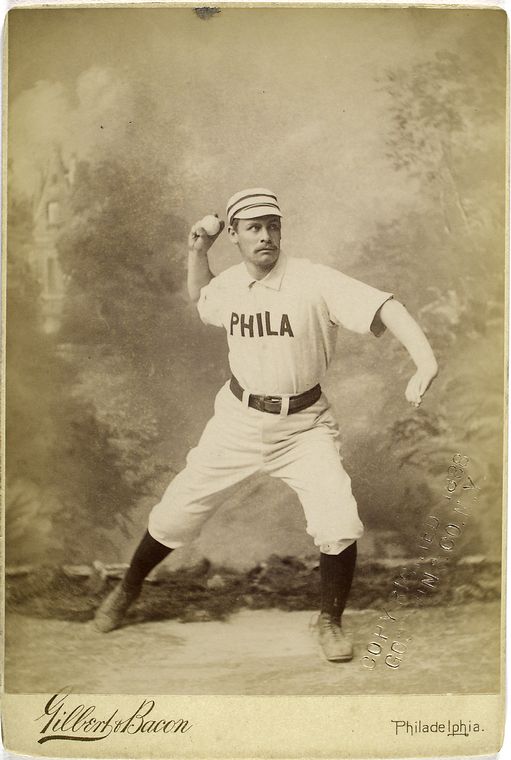
Baseball Player in the 19th Century


During the Reconstruction Era (mid to late 19th century), there was a game of cricket played between two teams in 1879. The game was between a cricket team called Daft's All England Eleven and a baseball team of eighteen baseball players. The game was played at the Union Baseball grounds in Brooklyn, and apparently the team of cricket players defeated the team of baseball players very handily and won the match. The news article, from the New York Herald, describes when and where the match was played, as well as the details of the names of the players, how the match went, and how it ended. It goes on to say that ten of the cricket players will play the Providence baseball men that night (the night the newspaper was published) in a baseball game. This information leads the reader to believe that the sports were crossing over in an attempt to acquire more attraction to each sport. Baseball might not have been as popular as cricket at the time, so the baseball players might have been playing cricket teams in order to gain more awareness and support from the community, or simply because there weren't very many other baseball teams to play.

The End of Reconstruction

Newspaper Reflection:

The newspapers showed me the general population's view of African Americans during this time period and in what light they thought about them. It was also weird to see words and phrases that are socially unacceptable in modern day, but were commonly used back then. These newspapers helped me to get a glimpse at the past and what life was like.


End of Reconstruction Research:

Reconstruction ended after Rutherford B. Hayes was elected. Republicans had given up hope for fighting for equality and rights for blacks, and after the election of 1877, the Union troops that had been in the South for protection were commanded to leave, leaving the blacks in the South susceptible to endless harshness and oppression. (I used the textbook as my source)